ServicesElectrical Repair
Electrical Repair for River Oaks Homes
If an outlet stops working or a breaker keeps flipping off, we track down why, show you the failed part and go over the parts that could replace it. You pick the fix knowing what each option costs and how long it's likely to last.
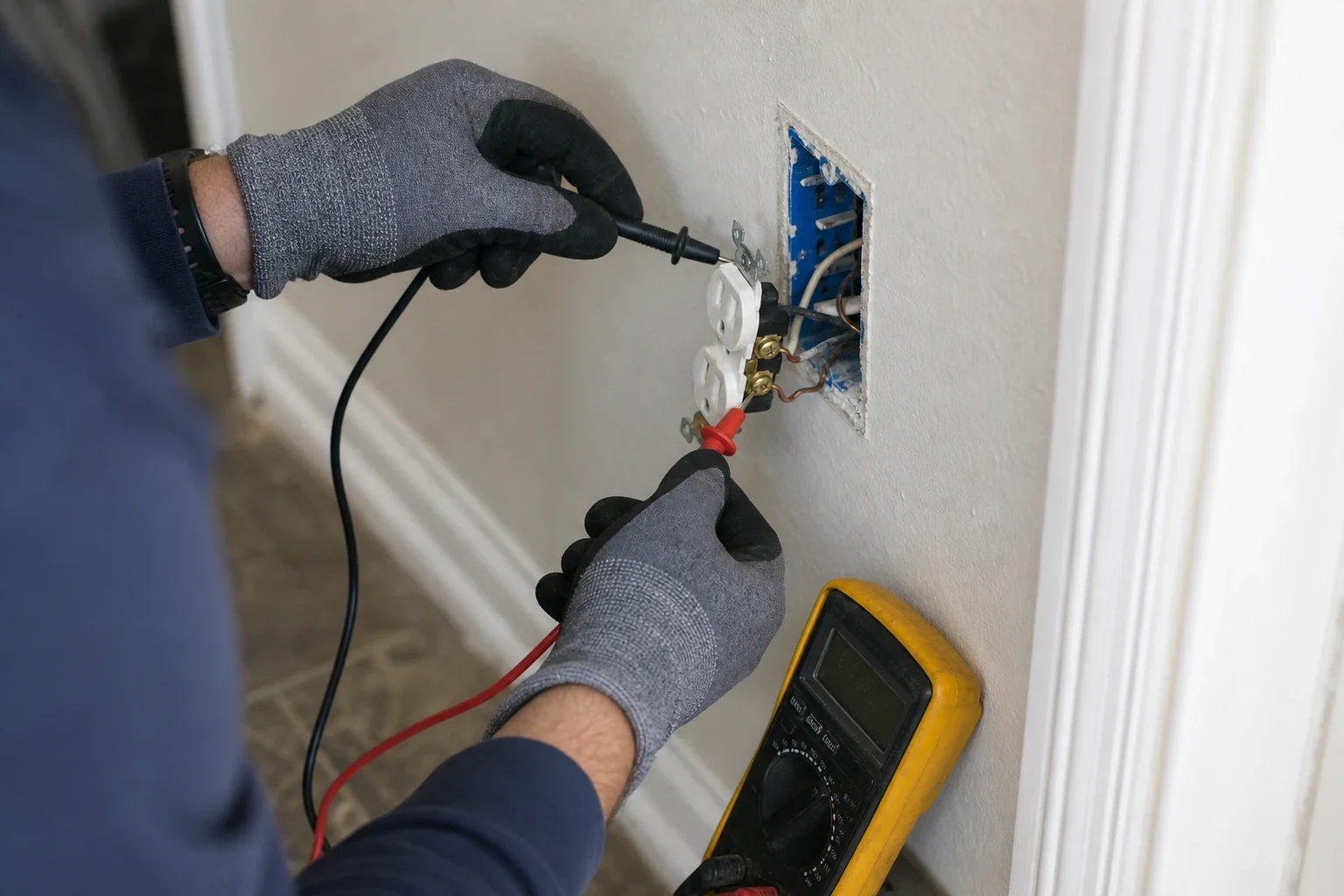
Tracking Down the Problem Before Picking the Fix
Nearly every household electrical problem traces back to a short list: a connection that has worked loose, a device that has worn out, a circuit carrying too much or wire that's been damaged. What matters is figuring out which one it is. We test first, so you don't pay for a new breaker when the actual trouble is a burned terminal in another room.
After we find the cause, the parts make the difference. A bargain receptacle with push-in backstab connections may fail again within a few years, while a spec-grade device fastened on its screw terminals stays tight far longer. Older aluminum branch wiring needs connectors made for it. We lay out these trade-offs in everyday terms and leave the choice to you.
We do repairs under our Master Electrical License, so whoever diagnoses the problem understands the code behind the repair as well as the parts.
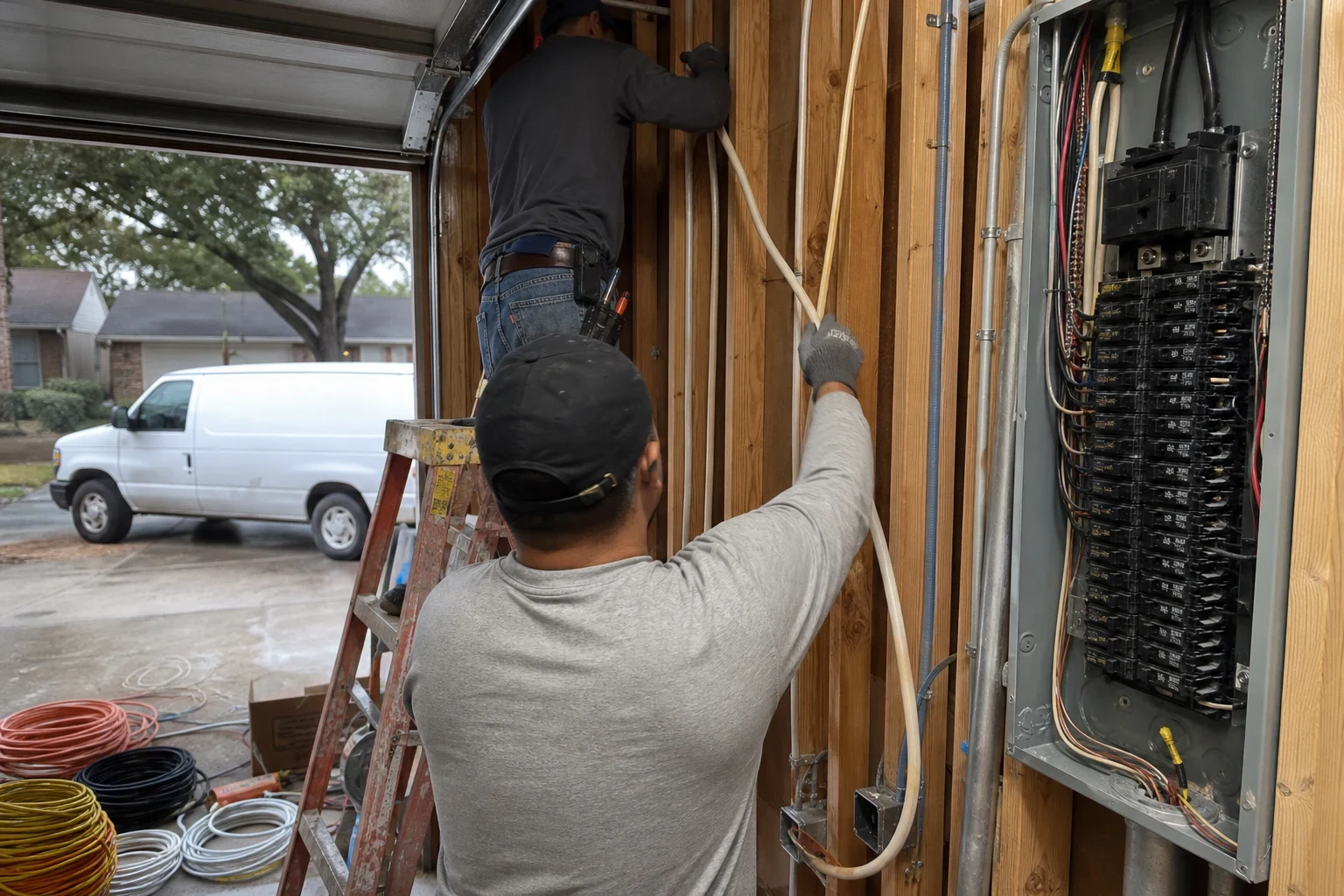
What an Electrical Repair Visit Covers
- 01
Circuit testing and tracing
We check voltage, continuity and load on the affected circuit and follow it back to where the fault actually starts. That often means opening a few boxes along the run, not just the one that stopped working.
- 02
Outlet and switch replacement
We swap worn or heat-damaged devices for spec-grade ones and land the wires on screw terminals instead of push-in holes. Where code calls for it, we use tamper-resistant, GFCI or AFCI protection.
- 03
Connection repairs
Loose wire nuts and corroded splices are a common source of flicker and heat. We cut back to clean conductor, remake the splice and secure it properly in the box.
- 04
Aluminum wiring remediation
If your home has aluminum branch circuits, we pigtail them to copper using connectors listed for aluminum-to-copper joints, or install devices rated CO/ALR. We'll explain which approach suits your circuits.
- 05
Breaker replacement
A breaker that trips under normal load or feels hot gets replaced with one listed for your panel. Mixing brands is a shortcut we don't take, since a poor fit on the bus bar causes its own problems.
Questions about Electrical Repair?
Call(682) 310-2319When Your Home Needs an Electrical Repair
The same breaker trips again and again
Frequent trips point to an overloaded circuit, a short or a breaker that's wearing out. Flipping it back on each time covers up the problem without fixing it.
An outlet that's warm or turning brown
Discoloring near the slots or a light smell of hot plastic means a loose connection is heating up. Leave that outlet unused until someone checks it.
Flickering or dimming lights
A brief flicker as a large appliance starts can be normal. Flicker without a trigger, or in just one room, usually points to a connection coming loose. During hot summers, with the AC working hard, those weak points appear sooner.
An outlet is dead but no breaker has tripped
Many times a GFCI farther up the line has tripped, but a backstab connection inside the wall can also let go. We figure out which.
Buzzing or crackling from a switch or outlet
That noise means arcing. Get it looked at soon.
How Your Repair Visit Runs
- 1
Book by phone
Tell us what you're noticing and when it happens. That helps us bring the right parts and test equipment.
- 2
Test and find the cause
We isolate the circuit, test it and open boxes as needed. We show you what we found, including photos of anything hidden in the wall or panel.
- 3
Talk through your options
We explain the materials that fit the repair, such as device grades or connector types for aluminum wire, and give you the price before work begins.
- 4
Repair, retest and tidy up
We make the repair, test the circuit under load and clean up. If the work needs a permit and inspection, we handle it as the local jurisdiction requires.
What Affects the Price of a Repair
We price each repair once we've found the cause, not ahead of time. Before any work starts, you hear the price and what it covers. These factors have the biggest effect.
- How long the fault takes to track down
- A dead outlet goes fast. A problem that only appears under certain loads needs more time on the meter.
- The parts you pick
- Spec-grade devices, AFCI or GFCI breakers and connectors rated for aluminum cost more than basic parts and usually last longer. We'll point out where the better part pays off and where it doesn't.
- Getting to the wiring
- Boxes hidden behind built-ins, cramped attics in summer heat and wiring under the house all take extra time to reach.
- Anything else that turns up
- When a repair exposes brittle insulation or more damaged splices, we pause and explain before going further. If the problems run wider, a whole-home rewiring or panel upgrade may be the better answer, and we'll tell you so straight.
Questions About Electrical Repairs
What keeps tripping my breaker?
It's usually one of four things: too much plugged into one circuit, a short in a cord or fixture, a ground fault, or a breaker that's worn out. Testing the circuit tells us which. The fix might be shifting a load to a different circuit or running a new dedicated line.
Do I need to replace aluminum wiring, or can it be repaired?
Plenty of homes with aluminum branch wiring can be made safer without rewiring. Pigtailing to copper at every switch and outlet, using connectors listed for aluminum, treats the connections where problems begin. When the wire itself is damaged, replacing those runs is the better choice.
Who actually works on my wiring?
Licensed and insured electricians handle your repair, not a general handyman. One person tests the circuit, explains what turned up and makes the fix, so you know exactly who to talk to.
Will my repair need a permit?
A basic device replacement usually doesn't. If the repair adds circuits or involves the panel, we get the permit and set up the inspection your local jurisdiction requires.
Do you stand behind your repairs?
Yes. Each repair carries our 1-year workmanship warranty, and if something we did isn't right, we return and fix it.
Get That Problem Traced and Fixed
Tell us what's happening and we'll find a time to come out, test it and walk you through the fix. We serve River Oaks and nearby towns like Fort Worth, Sansom Park and Westworth Village.