ServicesSurge Protection
Surge Protection for River Oaks Homes
A good surge protector quietly absorbs the spikes that shorten the life of your air conditioner, appliances and electronics. We explain the device types and what their ratings mean, then install the one that fits your panel and your home.
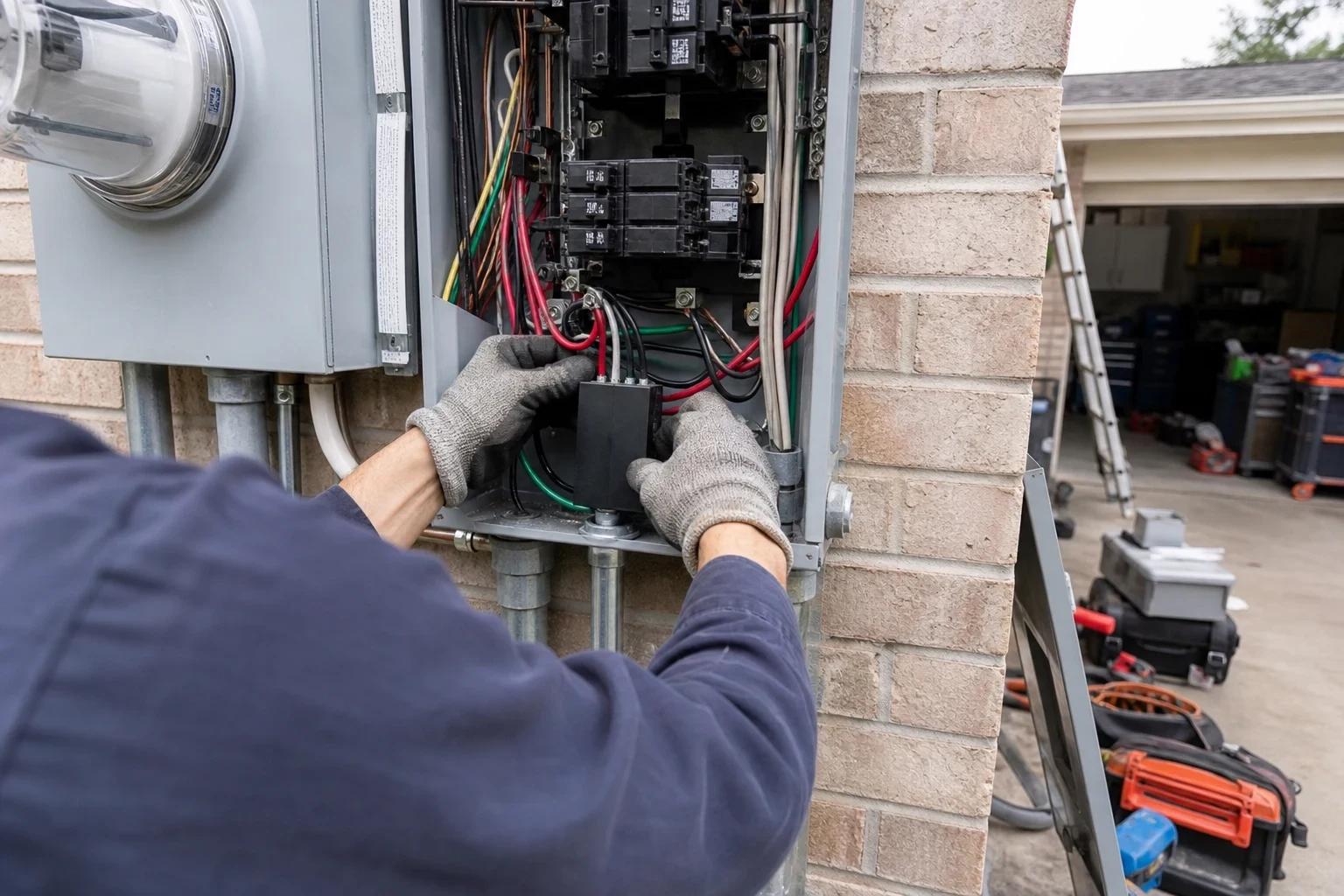
What Whole-Home Surge Protection Does
Surges come from lightning, utility switching and even large motors cycling inside your home. Most are small, but they add up. Control boards in furnaces, AC units, refrigerators and washers take a little damage each time, and one day they simply stop working.
A whole-home surge protector mounts at your electrical panel and diverts excess voltage to ground before it reaches your circuits. Plug-in strips still have a place, but they only guard what is plugged into them. The two work best as layers.
We are licensed and insured electricians working under a Master Electrical License, and we walk you through the options before anything is installed. You decide with the trade-offs in front of you.
What Our Surge Protection Work Includes
- Type 1 and Type 2 options compared
- A Type 1 device can sit ahead of the main breaker and handles larger outside surges. A Type 2 device mounts at the panel and is the most common choice for homes. We explain where each fits and whether you need one or both.
- Ratings in plain language
- Spec sheets list a surge current rating in kA, a voltage protection rating and a short-circuit rating. Higher surge capacity means the device lasts longer. A lower voltage protection rating means less voltage gets through to your equipment. We translate these numbers so you can compare fairly.
- Grounding and bonding check
- A surge protector can only send energy where your ground path lets it. We check the ground rod connection, the bonding at the panel and the neutral, and point out anything that would weaken the device.
- Clean, short-lead installation
- Long, looped wires slow a protector down. We mount it close to the breaker it uses and keep leads short and straight, which is a small detail that changes real performance.
- Point-of-use and line protection
- For a home office, TV setup or gaming system, we can recommend plug-in units and protection for coax and data lines, since surges travel on those too.
When Surge Protection Is Worth Adding
Electronics dying early
When chargers, routers and TVs quit long before they should, repeated small surges are a likely cause.
Replaced AC or appliance boards
A repair tech found a failed control board or compressor part without an obvious reason. Those circuits don't handle spikes well.
Flickering in storms
Lights that blink during North Texas spring storms or when the utility switches lines show the voltage on your service is shifting.
Nothing installed at the panel
If the panel door opens onto breakers and nothing else, you have no whole-home device.
Costly new equipment
An EV charger, generator or home battery adds more electronics to your system, and they're worth protecting.
Dark indicator lights on older units
Surge strips and older panel units have status lights. Once the light is out, the protection is gone.
What Shapes the Cost of Surge Protection
Most surge protection jobs are straightforward, but a few things move the price. We look at your panel first and explain the cost before we start, so nothing comes as a surprise.
Device type and rating
A Type 2 panel device costs less than a combined Type 1 and Type 2 setup. Higher surge current ratings cost more but last through more events.
Panel space and compatibility
Some protectors need two open breaker spaces or a brand-matched breaker. A full or outdated panel can mean extra work, and sometimes a conversation about panel upgrades.
Grounding corrections
If the ground rod connection or bonding is loose, corroded or missing, fixing it adds time but makes the protector actually work.
Extra layers
Adding protection for coax, data lines or specific equipment raises the total, and it is optional.
What Happens on a Surge Protection Visit
- 1
Call to book
Let us know what you'd like protected and what equipment has already failed. We pick a visit time that suits you.
- 2
Check the panel and grounding
We note the panel brand, free breaker spaces, the main service and your grounding, which shows us which devices will fit.
- 3
Review your choices
We lay out the device options, explain ratings and trade-offs, and give you the price before starting. Permits and inspections are handled as the local jurisdiction requires.
- 4
Mount and test
The power goes off briefly while we mount the device. We then turn it back on, check the status indicator and label the device in your panel.
- 5
Explain what to watch for
We show you the indicator light and what a change means, so you know when the protection is due for replacement.
Common Surge Protection Questions
Do I still need surge strips with a whole-home protector?
For delicate electronics, yes. The panel unit takes the large surges coming in from outside, and a good strip handles what's left along with surges created inside the house. Using both covers more than either alone.
Does it protect against a direct lightning hit?
Nothing can guarantee that, since a direct strike carries a huge amount of energy. Surge protectors are made for the much more frequent nearby strikes and utility surges, which do most of the damage homes see.
How long is the install?
A typical panel-mounted unit takes part of a visit, and the power is off only briefly. Grounding repairs or panel changes add time, and we tell you before we start.
How can I tell the protector is used up?
Its internal parts, called metal oxide varistors, wear slightly with each surge they take. Most panel units have a status light, and when it goes dark or changes color, the device is spent and should be replaced.
Is there a warranty on the work?
Yes. Installation is covered by our 1-year workmanship warranty, and the device has whatever coverage its manufacturer provides.
Protect the Equipment You Rely On
We will look at your panel and grounding, explain the device options clearly and install the one that fits. Pair it with generator installation or a home battery backup system if you are planning those too.