ServicesGenerator Installation
Generator Installation in River Oaks
We install standby generators and portable generator hookups so your home keeps the power it needs when the grid goes down. Before anything is ordered, we walk you through fuel types, transfer switches and sizing, so you choose a setup that fits how you actually live.
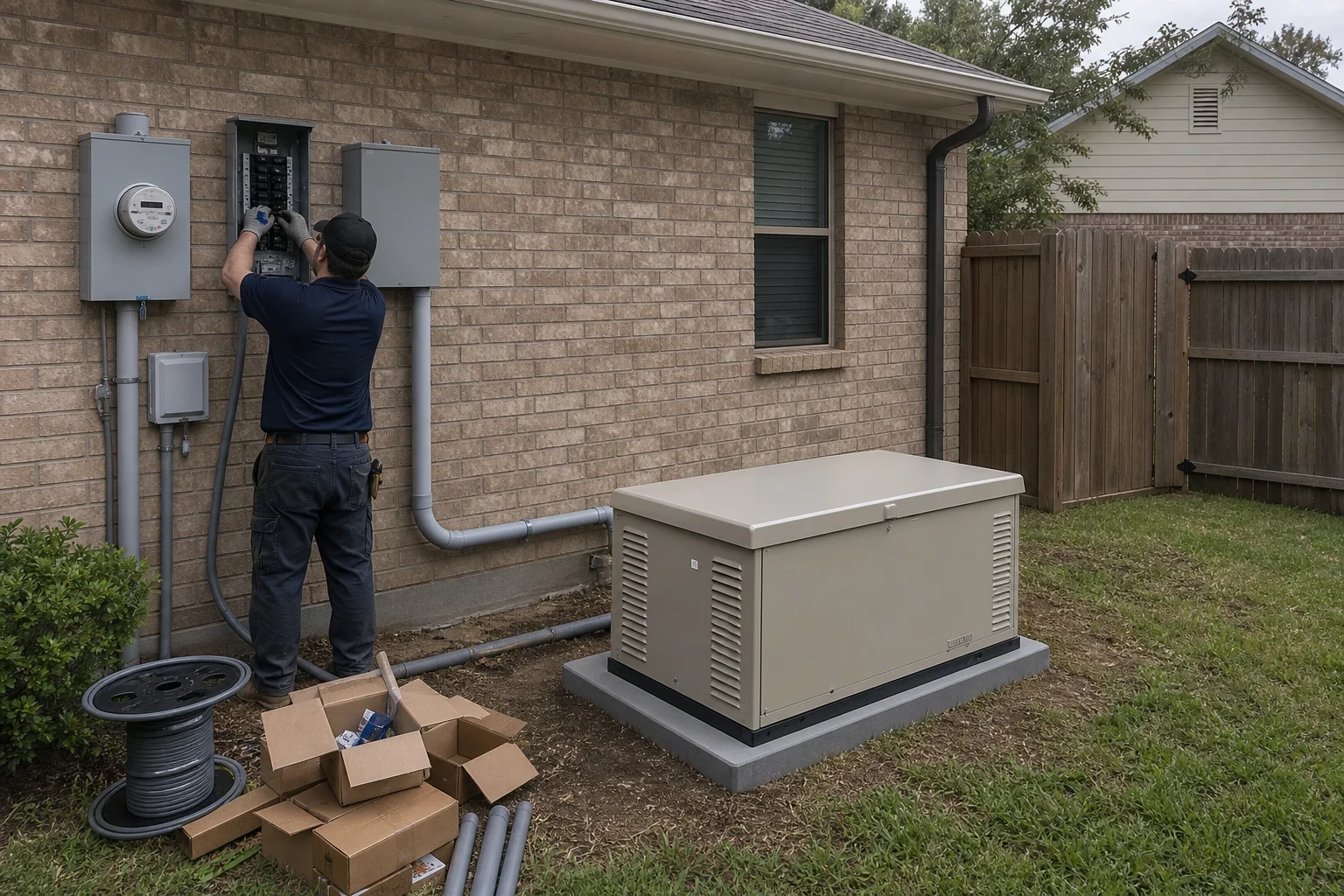
Backup Power Starts With the Right Choices
A generator is only as useful as the decisions behind it. The fuel it burns, the switch that connects it to your home and the circuits it is sized to carry all shape how well it works on the night you need it. We lay out each option, what it costs you in upkeep and where it falls short, then let you pick.
Our licensed and insured electricians handle the electrical side from the panel to the generator's output, and the work is done under a Master Electrical License. Gas piping is a separate trade, so we tell you exactly what the unit needs and how the pieces fit together on the day.
What Your Generator Installation Includes
Fuel type comparison
Natural gas runs off your existing utility line, so there is no tank to refill, but output can be a little lower than the same unit on propane. Propane stores on site and burns clean, though you need a tank sized for multi-day outages. Portable gasoline units cost less up front but need fresh fuel and manual setup.
Transfer switch selection
An automatic transfer switch senses the outage and starts the generator for you, usually within seconds. A manual transfer switch or a panel interlock kit costs less and works well with a portable unit, but someone has to be home to flip it. We explain which loads each option can carry.
Load sizing
We go through what you want running: the refrigerator, well pump, furnace blower, a window unit or the whole house including central air. Sizing to real loads keeps you from paying for capacity you will never use or a unit that stalls when the compressor kicks on.
Pad and placement
Standby units sit on a composite or poured concrete pad. Composite pads are light and come ready from many manufacturers. Concrete holds up well in shifting clay soil. We place the unit with the clearances from windows, doors and vents that the manufacturer and code require.
Wiring, conduit and permits
Outdoor runs go in conduit rated for sun and weather, with copper conductors sized for the load and the distance. We handle permits and inspections as required by the local jurisdiction.
Signs It Is Time to Add a Generator
Outages keep catching you off guard
If storms or grid strain have left you sitting in the dark more than once, a backup plan saves food, sleep and frustration.
Someone at home relies on power
Medical equipment, a home office or an older family member who cannot handle the heat all make dependable backup power a real need rather than a nice extra.
You run a portable unit with extension cords
Cords snaked through a window are a fire and shock risk, and backfeeding through an outlet can injure line workers. A proper inlet and transfer switch fixes that.
Summer heat or winter freezes worry you
North Texas swings from triple-digit afternoons to hard freezes. Keeping the AC or the furnace blower running through either one protects your family and your pipes.
How a Generator Installation Goes
- 1
Planning visit
We look at your panel, your gas service and where a unit could sit. Then we go over fuel, switch and sizing options with you and answer every question before you commit.
- 2
Written scope and permits
You get a clear written scope listing the generator, switch, pad and wiring. We file for permits as the local jurisdiction requires and schedule around your week.
- 3
Installation day
We set the pad and unit, mount the transfer switch near your panel, run conduit and wire, and make the connections. Power to your home is off for part of the day, and we tell you when ahead of time.
- 4
Testing and walkthrough
We simulate an outage so you see the switch transfer and the generator take the load. You learn how to read the controller, run the exercise cycle and shut it down safely.
- 5
Inspection and follow-up
We meet the inspector if needed and correct anything flagged. Our work is backed by a 1-year workmanship warranty, and our Generator Service & Repair team can keep the unit maintained after that.
What Moves the Cost of a Generator
Every installation is priced on what your home needs, so we do not quote a number before we see it. The biggest swings come from the size of the unit and the type of switch. We go through each line with you so nothing comes as a surprise.
- Generator size and type
- A portable hookup costs far less than a whole-home standby unit. Within standby units, more kilowatts means a higher price for the equipment.
- Automatic or manual switch
- An automatic transfer switch adds cost but runs without you. A manual switch or interlock kit is the budget route for portable setups.
- Distance and fuel supply
- The farther the unit sits from your panel and gas meter, the more conduit, wire and piping the job needs. Propane adds a tank and its setup.
- Panel condition
- An older or full panel may need work first. If so, we explain why and how it ties into our Panel Upgrades service.
Generator Installation Questions
Something not covered here? (682) 310-2319
Should I choose natural gas or propane?
If your home already has natural gas service, it is usually the easier choice because there is nothing to refill. Propane makes sense where gas is not available or you want fuel stored on site. We compare run time and upkeep for your situation during the visit.
Can I just plug my portable generator into an outlet?
No. Backfeeding through an outlet can send power onto the utility lines and endanger anyone working on them, and it can damage your wiring. We install a proper inlet and a transfer switch or interlock so a portable unit connects safely.
How long does installation take?
A portable hookup is often done in one visit. A standby unit usually takes a day or two of work once permits and equipment are in hand, plus the inspection.
Do you pull the permits?
Yes. We handle permits and inspections as required by the local jurisdiction, and we are there to answer the inspector's questions.
Is a battery a better option than a generator?
It depends on how long your outages last and what you want to run. Batteries are quiet and need no fuel but have limited capacity, while generators run as long as fuel lasts. Our Home Battery Backup Systems page covers that side, and we are happy to compare both.
Ready to Plan Your Backup Power
We will look at your home, compare fuel and switch options with you and give you a clear written scope before any work starts.