ServicesLighting Installation
Lighting Installation in River Oaks
We install recessed lights, pendants, ceiling fans, dimmers and outdoor fixtures in your home. Before anything goes up, we walk you through the choices that matter, like canless versus can lights or wet-rated versus damp-rated, so the light you pick works well for years.
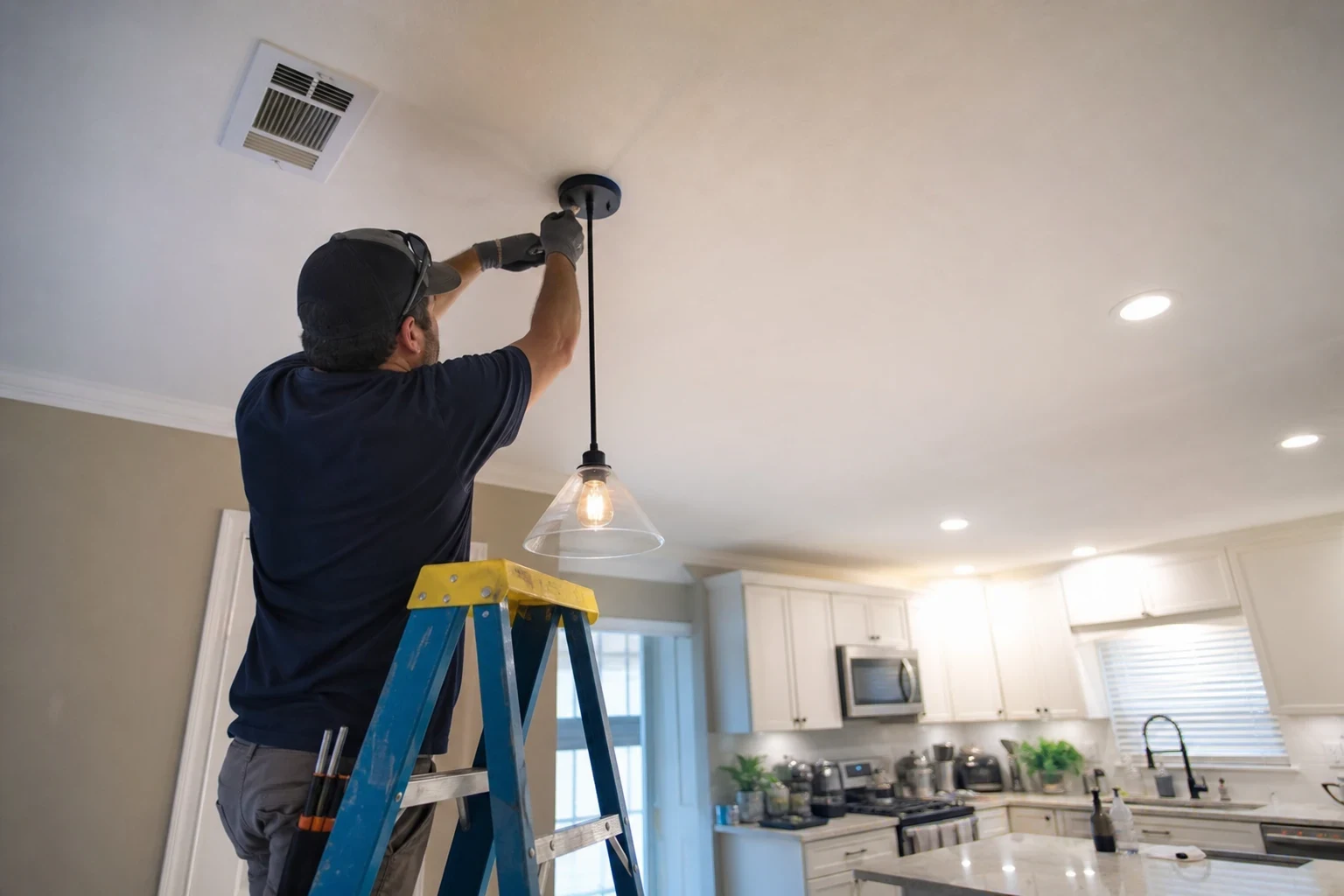
Good Lighting Starts With the Right Parts
Most lighting problems we see come from a mismatch, not a bad fixture. A heavy chandelier hung on a plastic box, a dimmer built for incandescent bulbs running LEDs, a porch light rated for damp spots sitting in direct rain. Each one works for a while, then flickers, buzzes, sags or fails.
So we start by explaining the options and what each one is good at. You choose with the trade-offs in front of you, and we install it on a box, switch and circuit that fit the job. Our work is done under a Master Electrical License.
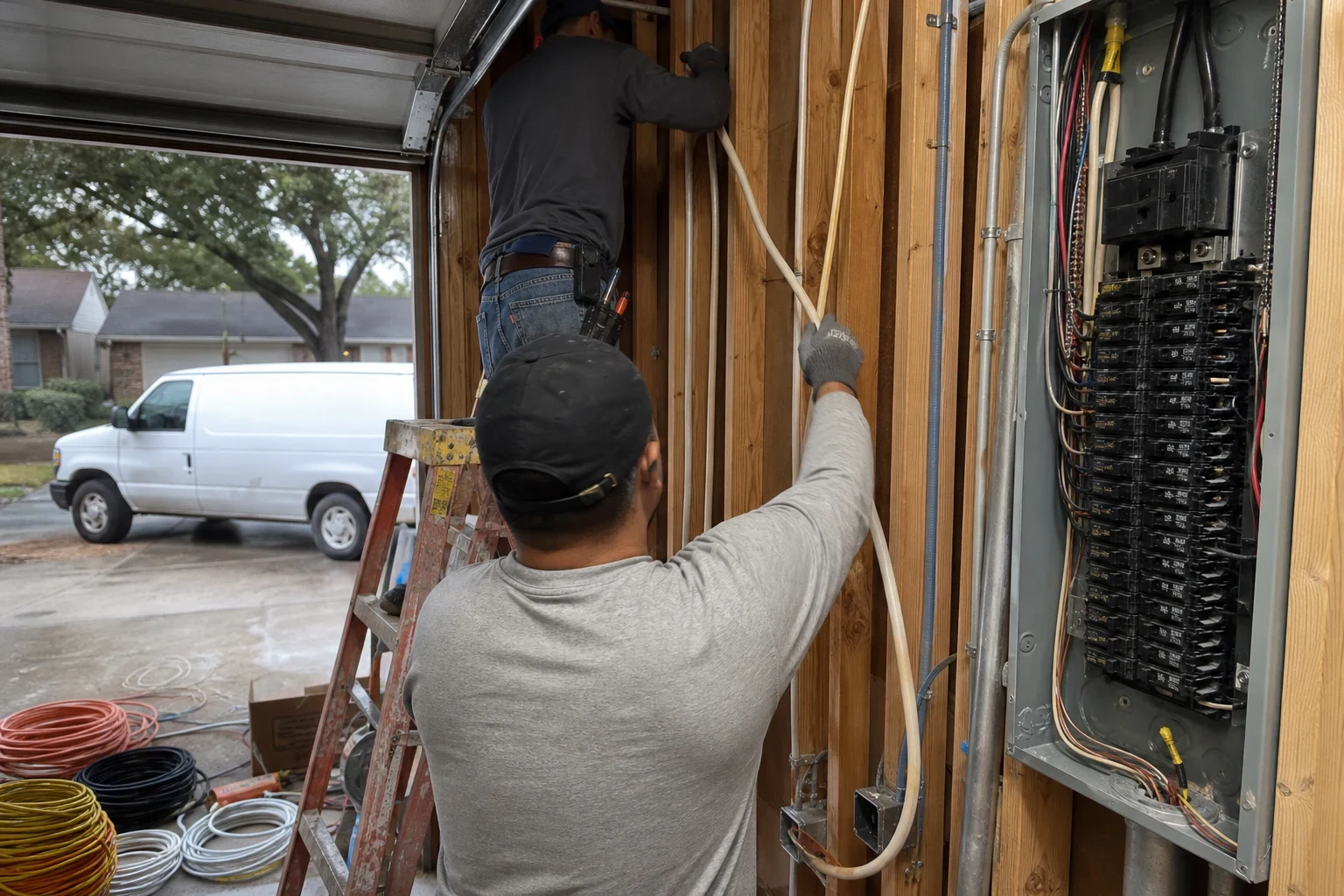
What Our Lighting Work Covers
- 01
Recessed lighting, can or canless
Traditional cans take standard bulbs and let you swap trims later. Canless wafer LEDs sit nearly flat, need less attic room and go in through smaller holes. Either way we use fixtures rated for insulation contact, which matters in an attic that bakes through a Texas summer.
- 02
Pendants and chandeliers
We check that the ceiling box is rated for the fixture's weight and add bracing when it isn't. Very heavy pieces get their own support so the box is never carrying the load alone.
- 03
Ceiling fans
A fan needs a fan-rated box and brace. Many older light boxes are not built for the wobble and weight, so we replace them before the fan goes up.
- 04
Dimmers and smart switches
LED bulbs need a dimmer made for them, or you get flicker and hum. We match the dimmer to the fixture's driver. Smart switches usually need a neutral wire, and we'll tell you if your switch box has one.
- 05
Outdoor and landscape lighting
Exposed spots get wet-location fixtures; covered porches can use damp-rated ones. For yards we explain low-voltage systems with a transformer versus line-voltage lights, and outdoor circuits get GFCI protection.
- 06
Under-cabinet lights
Puck lights, LED tape and slim bars each give a different spread of light. We hardwire them to a switch and tuck the driver where you can reach it later.
Questions about Lighting Installation?
Call(682) 310-2319Signs It's Time for New Lighting
You live by lamplight
If you turn on three lamps to read or cook, the room needs more fixtures or better placement, not brighter bulbs.
LEDs that flicker or buzz
This usually means an old dimmer that doesn't suit LED drivers. A matched dimmer typically fixes it.
A fan that wobbles or a fixture that sags
Movement often points to a box that isn't rated for the weight. It's worth having it looked at before it loosens further.
Dark entries and walkways
Steps, side yards and the driveway are where people trip. A few well-placed outdoor lights make coming home easier and safer.
Discoloring around an old fixture
Browned paint or a brittle socket can mean an older fixture has run hot for years. We replace it and check the wiring behind it.
How a Lighting Visit Runs
- 1
Book by phone
Tell us what you want to light and what's there now. We set a time for a service visit.
- 2
Walk the rooms and talk options
We look at your ceilings, attic access and switches, then explain fixture and bulb choices with their trade-offs. You get the scope and price in writing before work starts.
- 3
Protect, shut off and test
We lay down drop cloths, turn off the right breaker and test that wires are dead before touching them. Permits and inspections are handled as required by the local jurisdiction when new circuits are involved.
- 4
Install and check
Each fixture is mounted, wired and tested, including dimming range and any smart controls.
- 5
Clean up and walk through
We vacuum ceiling dust, haul away packaging and show you how everything works. Our installs carry a 1-year workmanship warranty.
What Shapes the Price of Lighting Work
Lighting jobs vary more than people expect. Two recessed lights in a room with open attic above can cost far less than one in a finished ceiling with no access. We price after seeing the space and explain each line so nothing is a surprise.
- Fixture type and count
- Canless wafers, heavy chandeliers and smart fans each take different time and parts. Several of the same fixture in one room is usually more efficient than one-offs around the house.
- Access above the ceiling
- Open attic space makes running wire straightforward. Finished ceilings or tight rooflines take more careful fishing and sometimes small access cuts.
- Boxes, bracing and switches
- Swapping in fan-rated boxes, adding a neutral or running a new switch leg adds to the job.
- New circuits and permits
- Adding a circuit at the panel brings more material and any required permit and inspection.
- Outdoor runs
- Trenching for buried cable, mounting on brick and weatherproof connections all move the price.
Lighting Installation Questions
Can I buy my own fixtures?
Yes, and many customers do. Send us the model or have it on hand at the visit so we can confirm it's rated for the spot and fits your box. Our 1-year workmanship warranty covers our installation; defects in the fixture itself go through the maker.
Should I choose can lights or canless lights?
Canless wafers are thinner, quicker to install and work well under tight attic space. Cans let you change trims and bulbs freely later. We'll show you both and recommend what suits your ceiling.
Will installing recessed lights damage my ceiling?
We cut clean holes sized to the fixture, and the trim covers the edge. If a wire run needs an extra access cut, we'll tell you before we start and talk through what patching that means.
Can I put smart switches in an older home?
Often yes. Many smart switches need a neutral wire in the box, which some older switch boxes lack. We check, and if it's missing we explain options like neutral-free models or running a new wire.
Who does the wiring in my home?
Every lighting job is handled by licensed and insured electricians. They test circuits before touching any wire, use boxes and connectors rated for each fixture, and take care of any permit the work requires. Ask them anything as they go; they're happy to explain what they're doing.
Let's Light the Rooms You Use Most
Tell us which rooms or outdoor spaces need light, and we'll set up a visit to look at your ceilings and walk you through the options. If you're also planning a remodel, ask about our remodel and addition wiring.