ServicesWhole-Home Rewiring
Whole-Home Rewiring in River Oaks
If your home still runs on cloth-insulated wire, aluminum branch circuits or two-prong outlets, rewiring replaces it with new copper circuits sized for how you live now. We show you the cable, boxes and breakers we plan to use, and why, before anyone opens a wall.
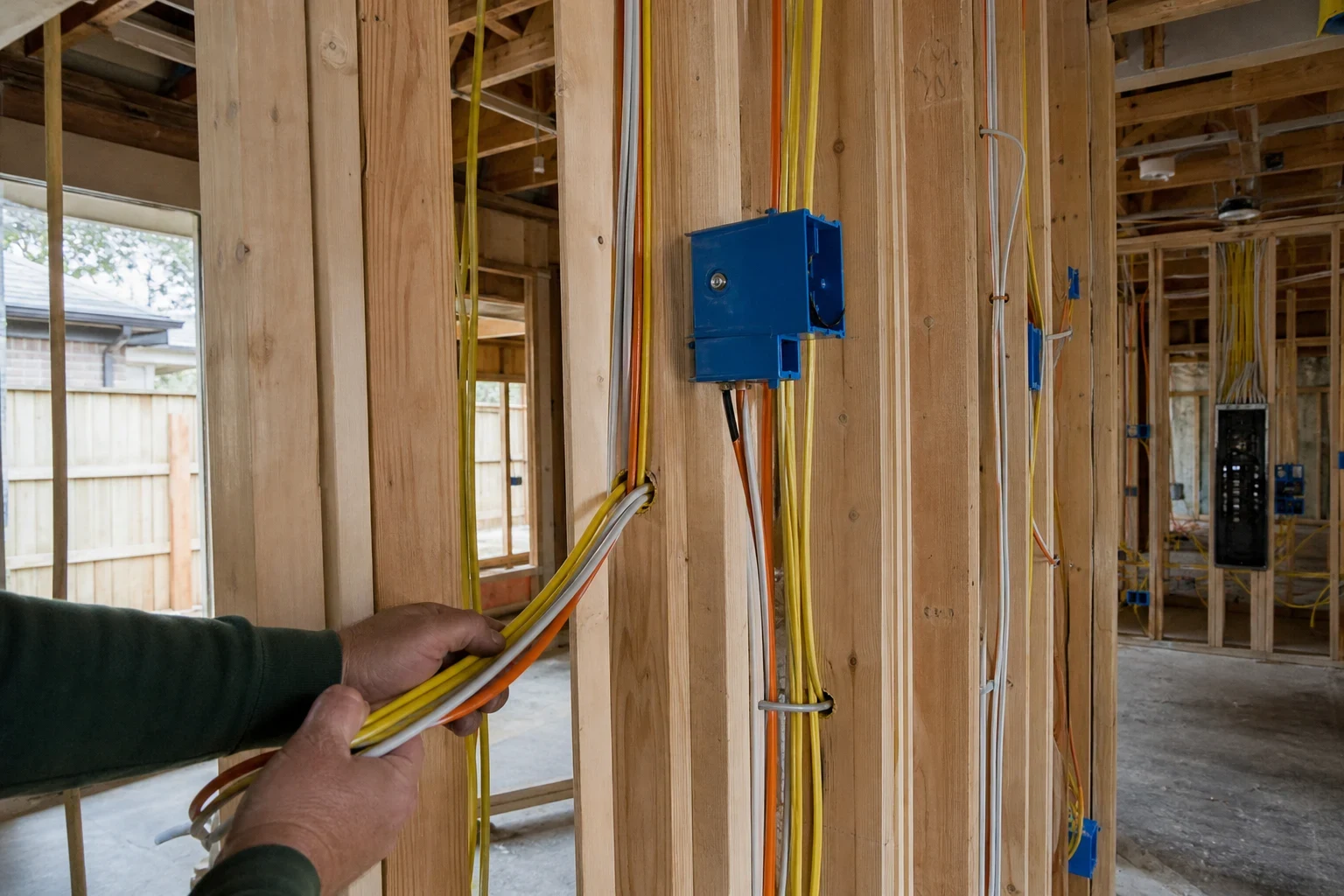
What Rewiring Means for Your Home
Whole-home rewiring means pulling out the old branch circuits and running new ones from the panel to every outlet, switch and light. It is a big job, so we only recommend it when patching would cost more over time or leave unsafe wire behind the walls.
The work is led under our Master Electrical License, and most of the conversation is about materials. Old wiring was built with what was standard decades ago: rubber or cloth insulation that turns brittle, no ground wire, and in some homes aluminum conductors that loosen at their connections. We explain what you have, what replaces it and what each option trades off, so you decide with the full picture.
What a Full Rewire Includes
New copper branch circuits
We run new copper cable to every room, typically 12-gauge for kitchens, baths and laundry and 14-gauge for general lighting. Every run includes a ground conductor, which most older two-wire systems lack.
Cable type chosen for each space
Inside finished walls we usually use plastic-sheathed NM cable because it fishes well through tight cavities. In exposed spots like a garage wall or an outdoor run, we use conduit or armored MC cable, which costs more but holds up to bumps and weather.
Boxes, outlets and switches
Undersized or metal boxes with no ground get replaced with properly sized boxes. New receptacles are tamper-resistant, with GFCI protection in wet areas.
Breakers matched to the new circuits
We fit AFCI and GFCI breakers where code calls for them. If your panel can't support the new layout, we'll say so plainly and talk through our Panel Upgrades service.
Patching and cleanup
We cut the smallest openings we can and leave them clean and ready for drywall repair and paint. Floors are covered and debris leaves with us each day.
When Old Wiring Needs to Come Out
Two-prong outlets in most rooms
Outlets with no ground slot tend to sit on wiring with no ground. A cheater plug covers that up, but your surge strips and electronics still lack a real ground.
Fabric-covered or flaking insulation
Wire in the attic or crawlspace wrapped in cloth, or with insulation that crumbles at a touch, is worn out. Attic heat makes it break down faster.
Aluminum circuits to outlets and lights
Check cable jackets for the letters "AL." Aluminum moves more than copper as it heats and cools, so connections work loose and outlets can turn warm or discolored.
Flickering lights or warm outlets in several rooms
A single trouble spot can often be handled with our Electrical Repair service. When it shows up all over the house, the wiring itself is wearing out.
An insurer or home inspector noted the wiring
Older wiring types are a frequent note on sale inspections and insurance reviews. We'll go over what was flagged and what it takes to fix it.
How a Rewiring Job Runs
- 1
Walkthrough and wiring check
We open a few boxes, look in the attic and crawlspace, and check the panel. You see what we find and hear which materials we'd suggest for each area.
- 2
Written plan and permit
You get a written scope listing circuits, cable types and devices. We pull the permit required by the local jurisdiction before work starts.
- 3
Room-by-room installation
Our licensed and insured electricians work in sections so you keep power in part of your home at night when possible. Old wire is disconnected and abandoned or removed where reachable.
- 4
Inspection and walkthrough
The work is inspected as required. We then test every circuit, label the panel and walk you through what changed.
What Drives the Price of Rewiring
Rewiring prices depend on your home's layout and what we find in it, so we can't name a figure sight unseen. Once we've walked through, the written scope spells out where the cost comes from. These factors matter most.
- Square footage and number of circuits
- Each added room and outlet brings more cable, more devices and more hours. A kitchen with several appliance circuits raises the total fast.
- How easy the attic and crawlspace are to reach
- A roomy attic and a pier-and-beam crawlspace let us route cable with fewer openings in your walls. Slab homes, shallow attics and plaster walls slow the work.
- The cable you choose
- NM cable costs the least for runs inside walls. MC cable and conduit cost more to buy and install, but they protect runs that are exposed or outdoors.
- Panel work and permits
- When the new circuits call for a new panel, that becomes part of the job. What your jurisdiction requires for permits and inspections also affects the price.
Common Questions About Rewiring
Something not covered here? (682) 310-2319
Will we need to stay somewhere else during the rewire?
Usually not. We move through the house one section at a time and turn power back on in completed areas each evening when we can. Plan on some noise and dust while we're working.
Does rewiring mean opening up every wall?
In most houses, no. We pull the new cable through the walls from above and below, and only cut small openings where a run can't be reached otherwise. We leave each one neat and ready to patch.
Does aluminum wiring automatically mean a full rewire?
Not in every case. Some homes can use copper connectors rated for aluminum at each outlet and switch to make the wiring safer for a while. We go over both routes and what each one gives up so the choice is yours.
Will you take care of the rewiring permit?
We will. We get the permit your local jurisdiction calls for and book the inspections, so none of that paperwork lands on you.
Does a warranty come with a rewire?
It does. The work carries our 1-year workmanship warranty, and if anything we put in isn't right, we return and correct it.
Find Out What's Behind Your Walls
We'll look at your wiring, show you what we find and walk you through the materials that would replace it. You'll know the scope before anything changes.